The Saturday job small blowers keep quitting on
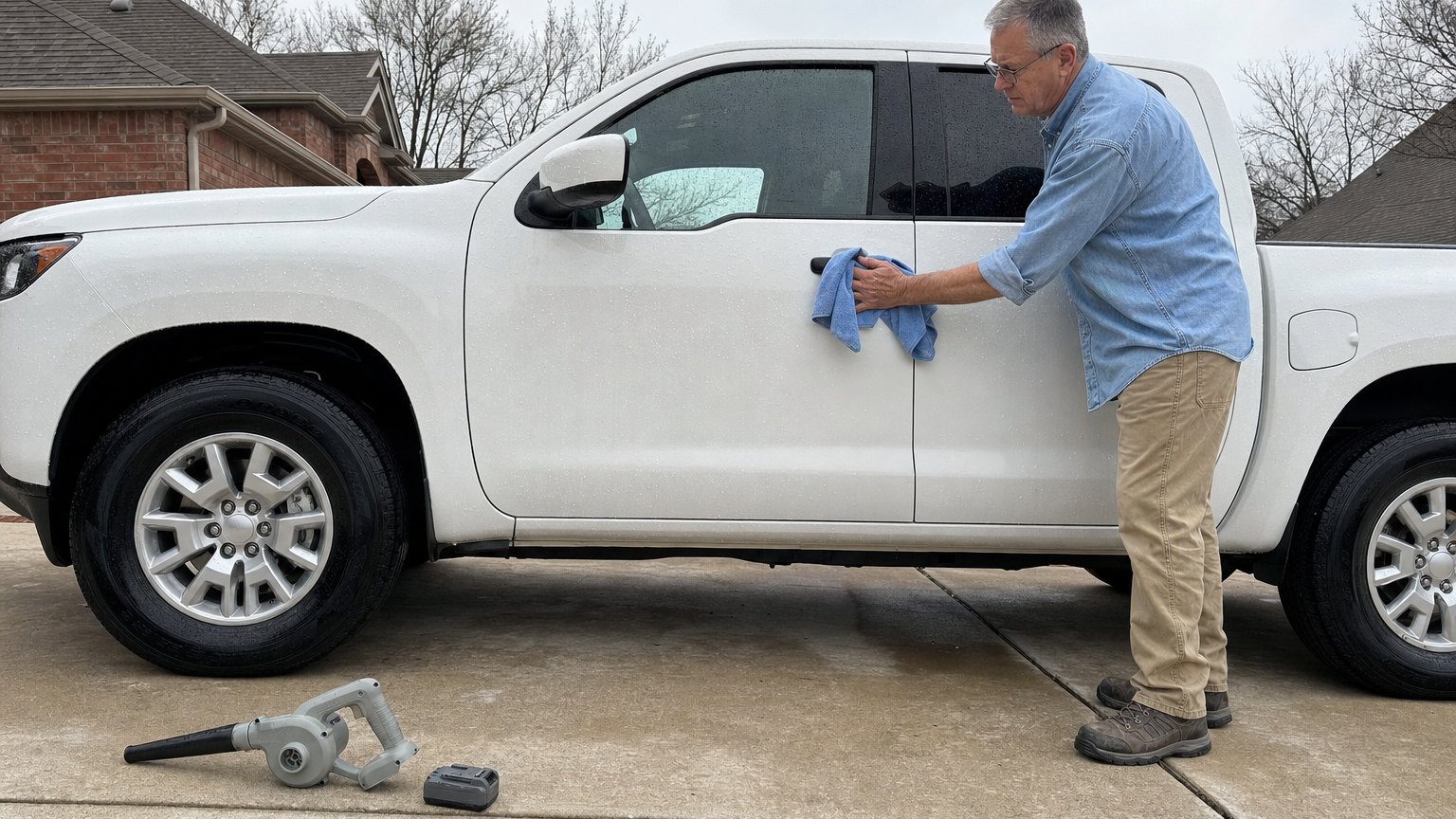
Most guys with a compact cordless blower bought it to dry the truck after a wash, while the paint is still wet. A few minutes of air and the paint never touches a towel.
The hood and roof go fine. By the passenger side the handle is warm, and a little later the motor stops. You give it a minute, squeeze out another short burst, and finish the truck with a towel. When you pull the battery, it's dead. So what keeps killing it?
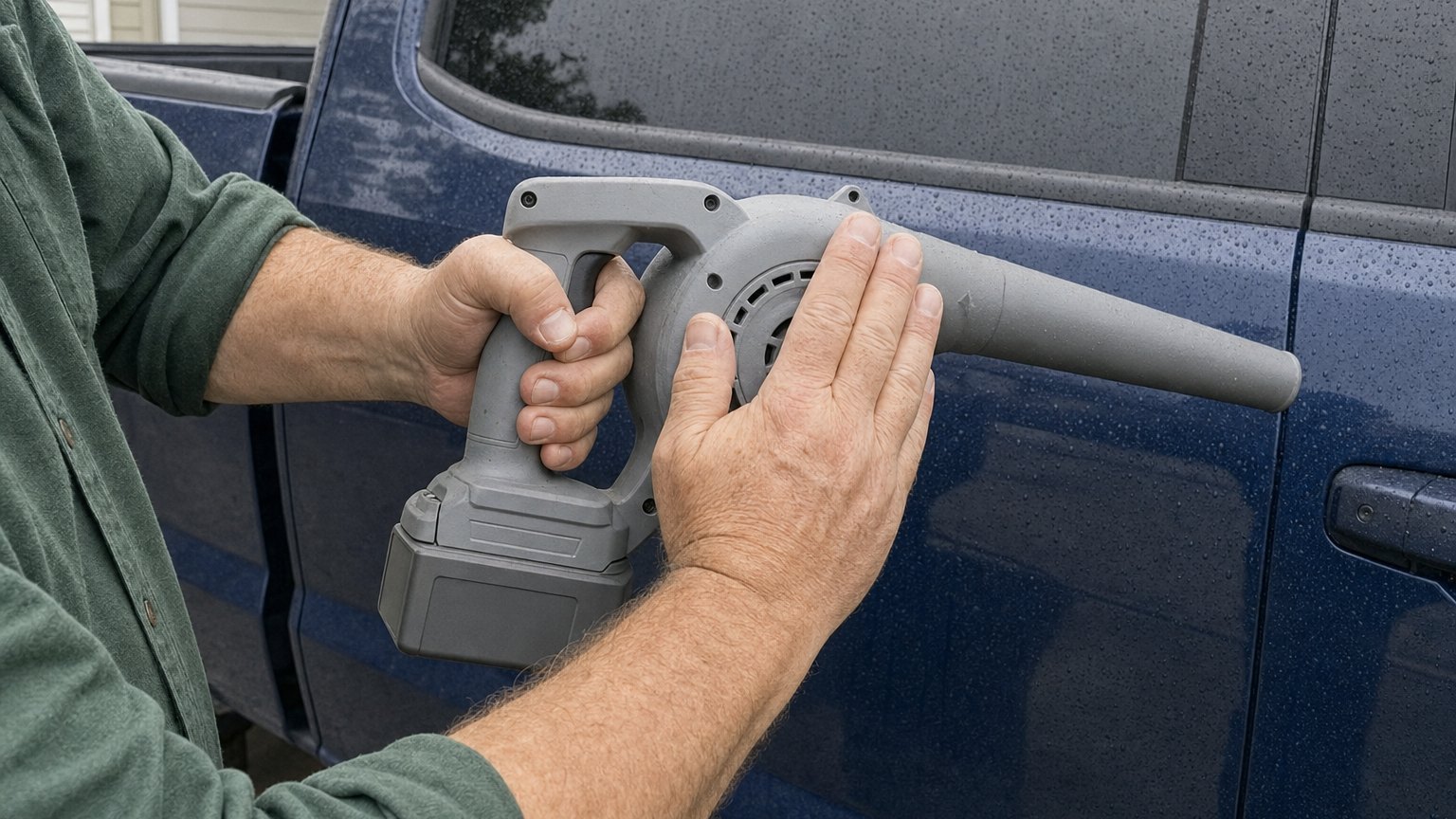
Past a certain temperature the blower cuts power to save its electronics, and if you push it there often enough, they give out. A compact blower packs a fast motor and its electronics into a body that fits in your palm, and most budget models give the heat nowhere to go, so you reach that point halfway through the job.
You feel it coming before it happens: the handle gets warm, then hot, then the motor stops.
Where the heat goes
Every motor turns part of its energy into heat. In a palm-sized blower, two parts decide how fast that heat leaves: the heat sink, which pulls heat off the electronics, and the airflow path, which carries it out of the body.
Two things make the problem easy to miss. First, it's gradual: the body warms up slowly, so the shutdown seems to come out of nowhere. Second, it has a hidden cost: a blower with a low battery cutoff drains your pack further than it should.
Heat
A fast motor and its electronics in a small body, with nowhere for the heat to go.
Deep discharge
A low cutoff lets the tool drain the pack into deep discharge, which shortens its life. The packs cost more than most blowers.
No warning
A basic blower just stops. It can't tell you whether it was heat, a low pack or a jammed motor.

Why your batteries pay for it
Draining a pack too far shortens its life. Every cordless tool has a cutoff voltage where it stops pulling power, and the lower that cutoff sits, the deeper it takes the pack into discharge.
The fix is a higher cutoff, so the blower stops while there's still charge in the pack. That, along with the heat, is where VortexHaus's new blower differs from the one it replaces.

Turbo Jet DB 3.0 (previous gen)
- Heat sink reached 316.2°F (157.9°C) under continuous load
- Ran packs down to a 12.84V cutoff
- No LED alerts to tell you what went wrong
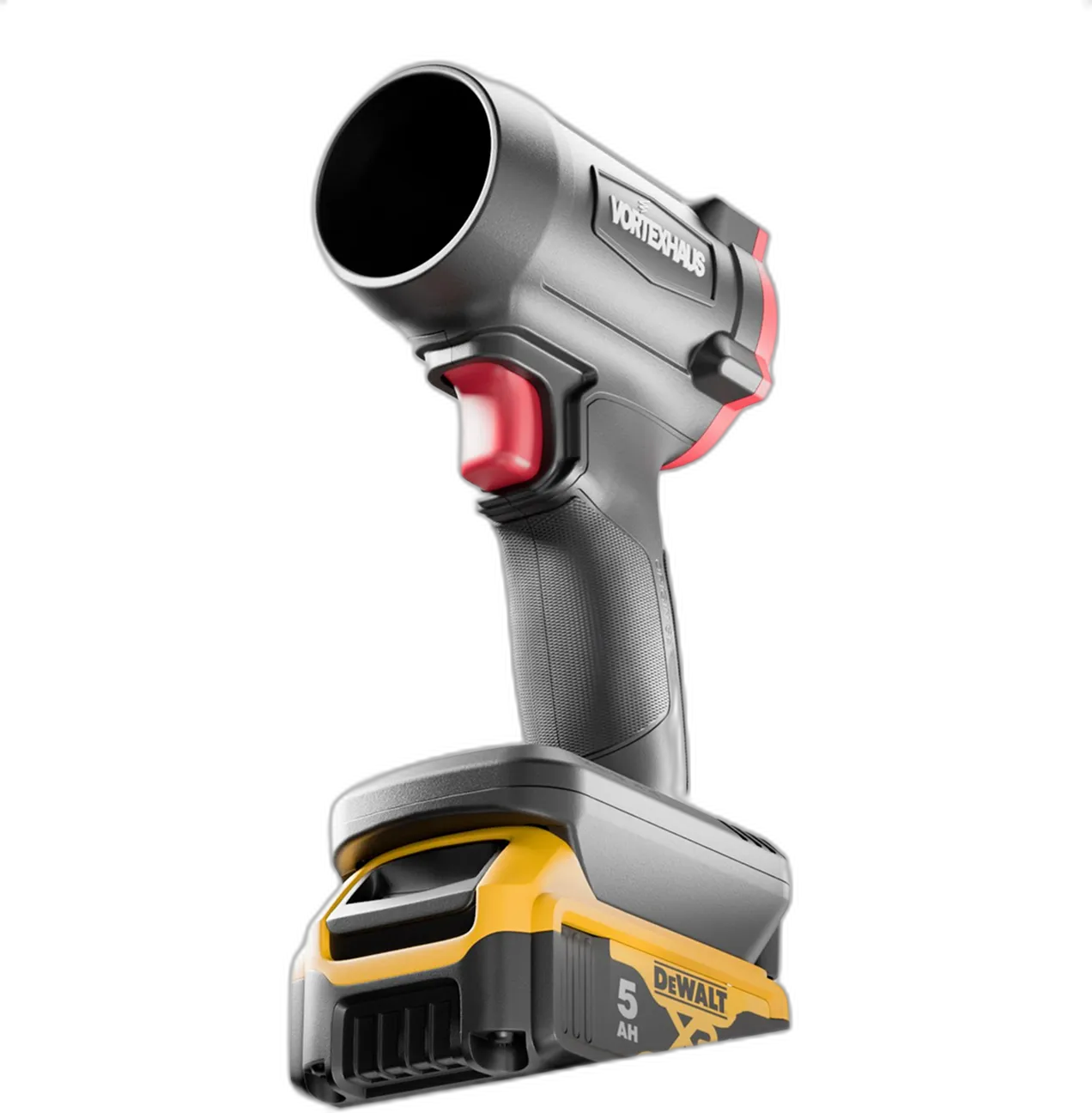
VortexHaus MACH
- Heat sink held at 135.3°F (57.4°C) under the same continuous load
- Cuts off at 14.6V, before the pack drops into deep discharge
- Five electronic protections, each with an LED alert
What the MACH does differently
VortexHaus spent two years rebuilding its blower from the motor out, and heat was the first thing it fixed. The company redesigned the heat sink and the way air moves through the body, and the MACH runs up to 60% cooler than the company's previous-generation blower, with a grip that stays under 90°F through a whole battery.

The VortexHaus MACH weighs about 0.7 lb without a pack and pushes over 2.2 lb of thrust. It takes the same DeWalt®, Makita® or Milwaukee® 18–21V pack your drill uses, stops before deep discharge, and runs five electronic protections, each with an LED alert.


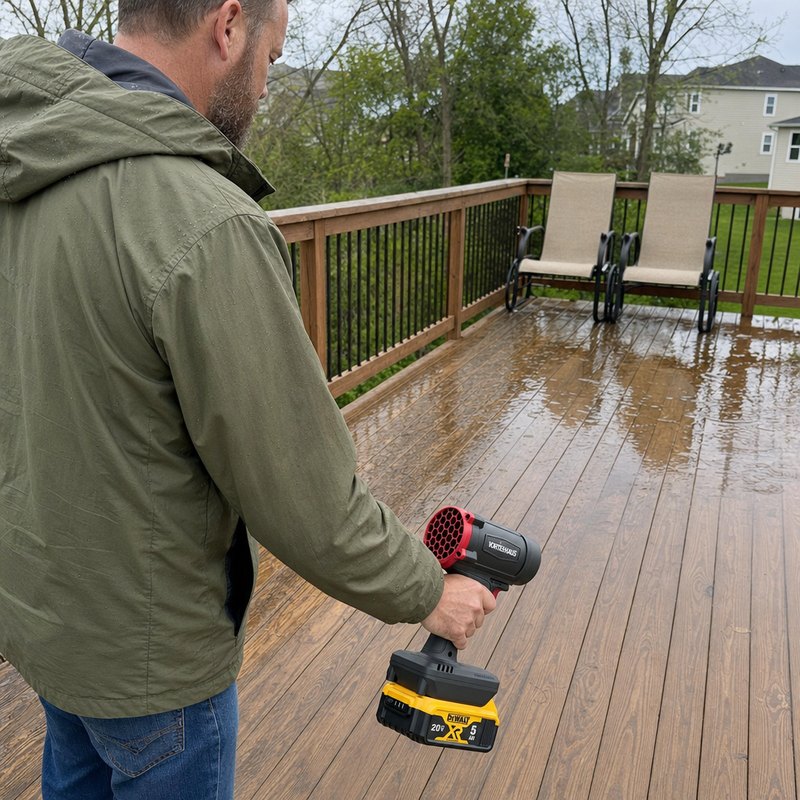
Owners also use it on garage floors, dog beds and even keyboards.
- Up to 60% cooler electronics than VortexHaus's previous-generation blower, thanks to the redesigned heat sink and airflow.
- A grip that stays under 90°F, from the first pull to the end of the pack.
- A higher battery cutoff (14.6V), so the pack stops short of deep discharge and still has charge left when you pull it.
- Five electronic protections, watching for high voltage, low voltage, overheating, a jammed motor and too much current. If one trips, the power backs off and an LED shows which.
- Backed by a 90-day money-back guarantee, even on a used unit, plus a 1-year warranty and a Bulletproof Build replacement if it fails under normal use.
One thing to know before you order: VortexHaus leaves the battery out of the box on purpose, since most buyers already own a shelf of packs. Check which system your drill runs on and pick that one. The MACH takes genuine DeWalt®, Makita® or Milwaukee® 18–21V slide-in packs, and it is not compatible with 12V, 40V, FlexVolt® or stem-style packs.